Updated November 2026. When we rechecked the site this month, glyphter.com was returning a 503 "service unavailable" error, so treat it as unreliable and use one of the alternatives below if it’s still down.
Glyphter was a free browser tool for building an icon font without touching a font editor. You dragged SVG icons onto letters of the alphabet, adjusted them, and downloaded a font. The idea is still useful, even if you now have better options for most projects. Here’s how it worked, how to prepare icons for any font generator, and when you should skip icon fonts altogether.
How Glyphter worked
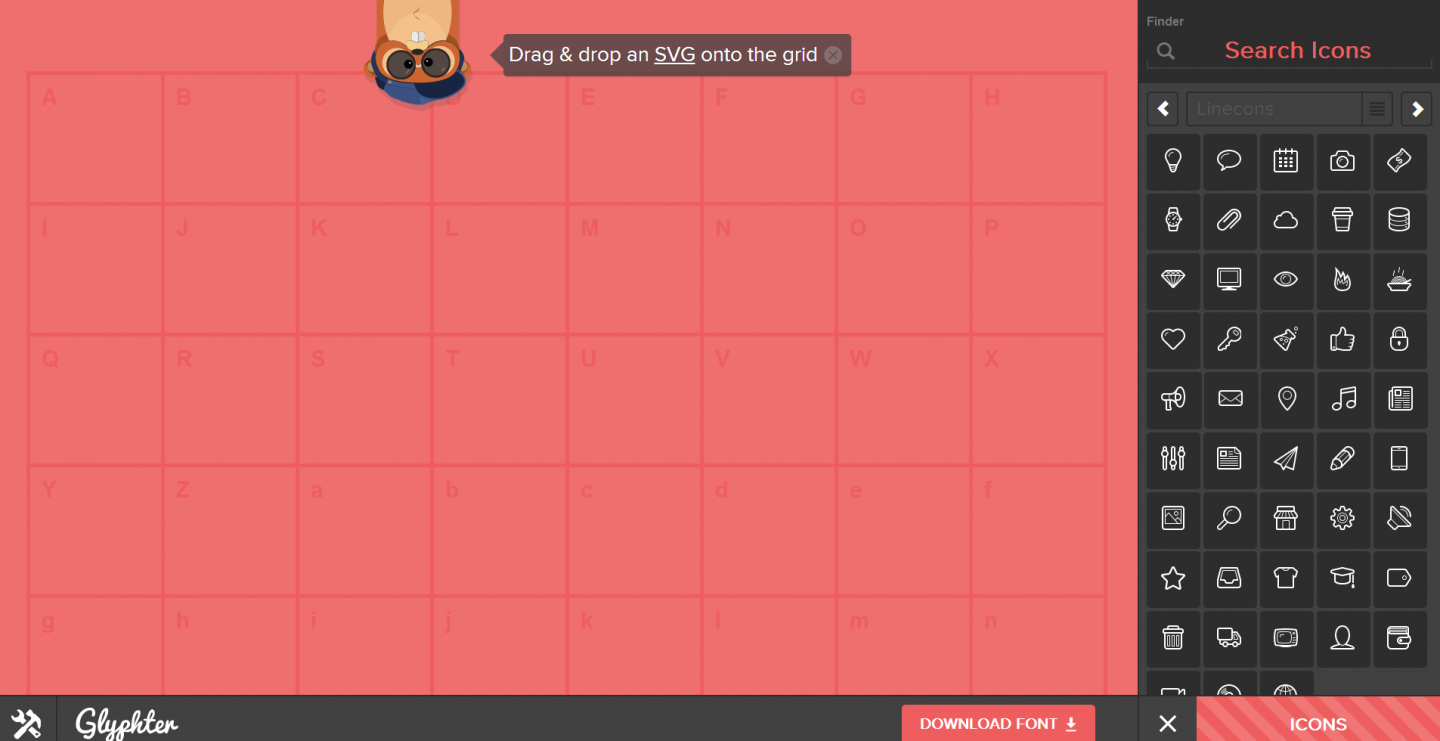
The working area showed a grid of characters, with icon sets down the right side. When we first wrote about it, there were more than 500 icons across 16 sets, including Font Awesome, Meteocons, Linecons and Elegant Themes Line Icons. You could also upload your own SVG files.
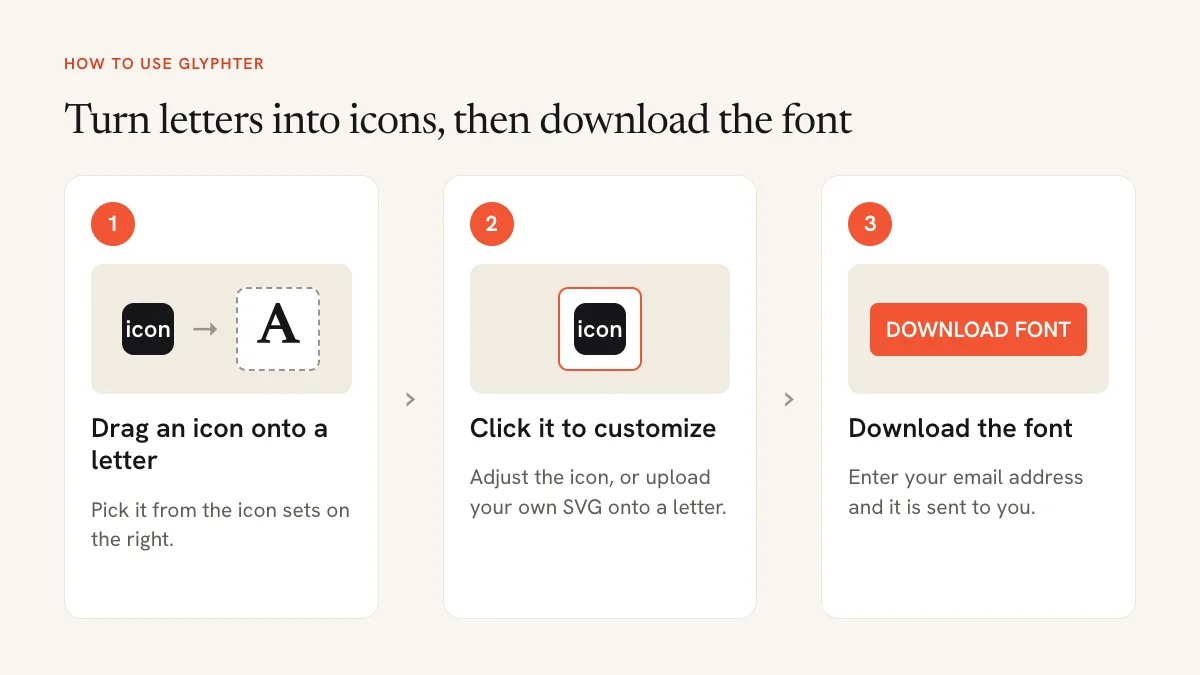
To build a font, you dragged an icon onto a letter, clicked it, and opened the edit panel with the pencil icon in the corner. From there you could scale, rotate and adjust each glyph.
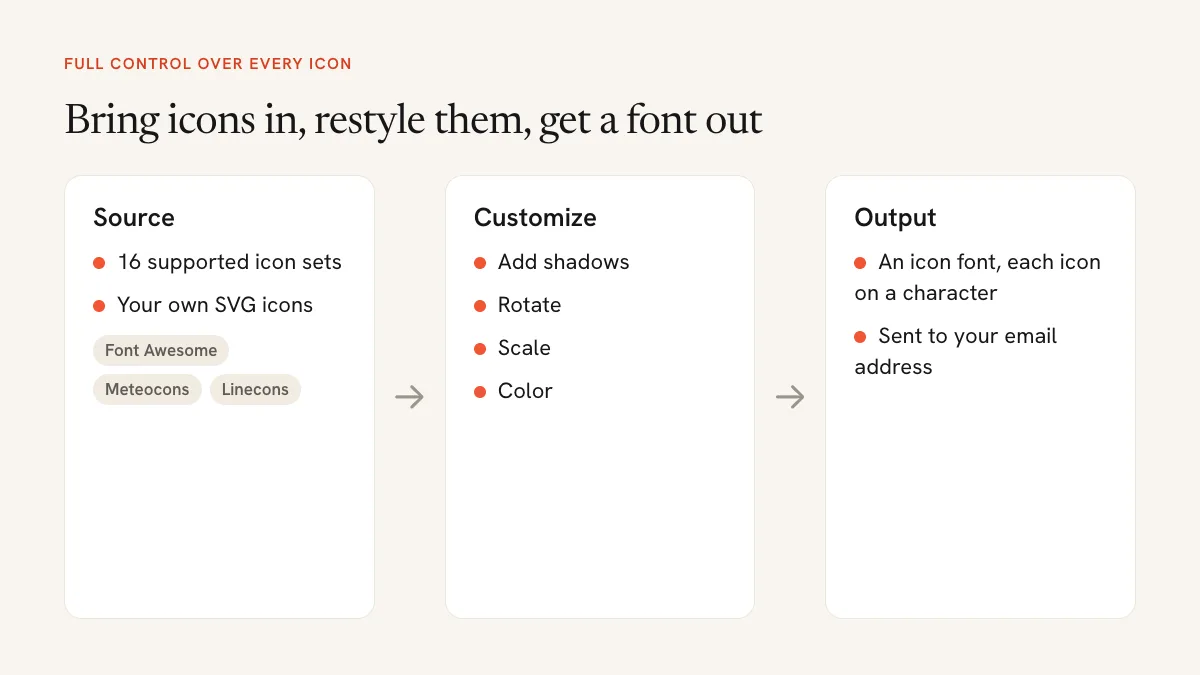
When you were done, the download button sent the font to you by email.
Alternatives that work today
- IcoMoon App: a browser app with a large icon library. You can import your own SVGs, pick glyphs and generate a font with the CSS included.
- Fontello: combines glyphs from open-source icon sets into one small custom font, and lets you import SVG icons.
- Fantasticon: a command-line tool that fits a build step, so the font is regenerated from your SVG folder whenever an icon changes.
With Fantasticon, one command is enough. The output folder has to exist first:
mkdir -p dist
npx fantasticon ./icons --output ./dist --font-types woff2 --asset-types css html
Prepare your SVGs first
Most failed icon fonts come from the source files. A font glyph is a single-color shape, so anything else gets lost or distorted on the way in. Before importing, check each icon:
- Convert strokes to outlines. Generators read filled shapes and may drop stroke widths.
- Merge shapes into one compound path so overlaps don’t cut holes in the wrong places.
- Use one color. Gradients, opacity and multiple fills don’t survive.
- Remove clip paths, masks and embedded images.
- Use the same square artboard for all icons, such as 24 by 24, so they line up with each other.
- Run the files through SVGO to strip editor metadata.
Using the finished font
WOFF2 is the only format you need for current browsers. Declare it, then attach each glyph with a class:
@font-face {
  font-family: 'site-icons';
  src: url('/fonts/site-icons.woff2') format('woff2');
  font-display: block;
}
.icon::before {
  font-family: 'site-icons';
  font-style: normal;
  line-height: 1;
}
.icon-search::before { content: '\e900'; }
Screen readers can try to announce the character, so hide the decorative glyph and label the control:
<button aria-label="Search">
  <span class="icon icon-search" aria-hidden="true"></span>
</button>
Should you still use an icon font?
For most new sites, SVG is the better choice. Icon fonts are limited to one color, can render a little blurry, and show empty squares if the font fails to load or a user’s settings override it. They also make every page download glyphs it might not use.
An SVG sprite avoids those problems, and it’s about as easy to use. Keep your icons in one file as <symbol> elements with IDs, then reference them:
<svg width="24" height="24" aria-hidden="true">
  <use href="/icons.svg#search"></use>
</svg>
Set fill: currentColor in your CSS and the icon will follow the text color, just as a font glyph does. An icon font still makes sense when you maintain an older codebase that already relies on one, or work in an environment where only text can be styled.